
For the modern professional, the 6:00 PM hour often marks the beginning of “decision fatigue,” a psychological phenomenon where the quality of choices deteriorates after a long sequence of decision-making. This fatigue is the primary driver of “meal prep burnout,” that moment when the noble intention of a home-cooked, nutritious dinner is sacrificed for the immediate convenience of high-sodium takeout or processed snacks. Transforming your Sunday afternoon from a stressful kitchen marathon into a high-octane, efficient prep session is not just about cooking; it is about reclaiming your cognitive bandwidth. By mastering easy high protein meal prep, you are building a strategic defense against the energy slumps and poor dietary choices that derail peak performance.
The metabolic importance of this routine cannot be overstated. Protein is the most satiating macronutrient, essential for muscle maintenance, neurotransmitter synthesis, and steady blood glucose levels. While dietary requirements vary, clinical data suggests that most adults thrive on an intake between 50 and 175 grams daily. Specifically, a landmark study found that individuals consuming 1.34g/kg of body weight in protein experienced superior weight management outcomes and metabolic health over a six-month period compared to those on a standard-protein diet. For older professionals, maintaining an intake of 75 to 90 grams is a critical proactive measure against sarcopenia (age-related muscle loss), ensuring that physical vitality matches professional longevity.
This comprehensive guide moves beyond the uninspired “boiled chicken and broccoli” trope that has characterized fitness culture for decades. Instead, we combine the technical precision of food science with professional kitchen logistics to create a system that is as efficient as it is delicious. We will explore seven high-level hacks designed to solve the most common meal prep frustrations—from rubbery textures and “fridge smells” to the safety risks of the “Danger Zone.” Whether you are a seasoned home cook or a novice looking to optimize your week, these strategies will empower you to prioritize consistency over perfection, starting with just a few “anchor” meals to fuel your success.
Hack #1: The Secret to Reheating High-Value Proteins Without Losing Quality
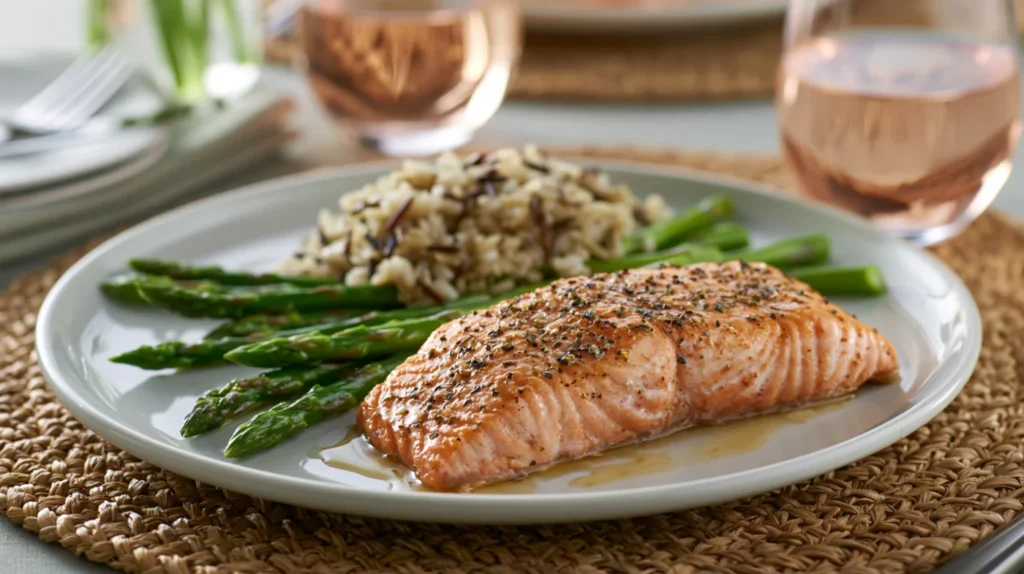
The primary reason professionals abandon easy high protein meal prep involving seafood is the “rubbery finish.” From a food science perspective, salmon is a delicate protein composed of short muscle fibers and high moisture content. When subjected to high heat during reheating, these fibers contract violently, a process called denaturation, which squeezes out internal moisture and releases a white protein called albumin. To preserve the flaky, melt-in-your-mouth texture of a premium fillet, you must adopt the “Low and Slow” philosophy. Rushing the process is the fastest way to turn an expensive piece of wild-caught fish into a culinary disappointment.
How to Master the Salmon Reheat
To ensure your protein remains as tender as the moment it left the initial pan, follow this three-step actionable guide derived from professional kitchen standards.
- Select Your Method (Oven or Air Fryer):
- The Oven Method (The Gold Standard): Preheat to a gentle 275°F. Place your salmon on a rimmed baking sheet and cover it loosely with aluminum foil. This creates a steam-trap environment, preventing the moisture evaporation that leads to dryness. Heat for 10–15 minutes.
- The Air Fryer Method (The Efficiency Play): Preheat to 350°F. Lightly brush the surface with olive oil to create a protective lipid barrier. Heat for 4–5 minutes, checking at the 3-minute mark to ensure the thinner edges don’t overcook.
- Add a Moisture Element:
- Never reheat “dry.” Professional chefs recommend adding a teaspoon of water, a pat of butter, or a squeeze of lemon juice before covering. For oven users, placing a small oven-safe dish of water on the rack below the salmon maintains a humid environment, mimicking a commercial steam oven.
- Target the Safe Internal Temperature:
- Use a digital meat thermometer to reach an internal temperature of 145°F. Remove the fish from the heat when it hits 140°F; the “carryover cooking” will bring it to the final safety target while it rests for one minute, allowing the juices to redistribute through the muscle fibers.
Hack #2: The Container Hierarchy—Why Material Choice Dictates Freshness
The logistics of meal prep extend to the chemical composition of your storage vessels. Choosing between glass and plastic is not merely an aesthetic choice; it is a decision that impacts food safety, flavor integrity, and the longevity of your prepped meals. In the scientific community, the focus is on the porosity of materials. Plastic (polypropylene) is porous, meaning it can absorb microscopic food particles and odors over time—leading to that lingering “curry smell” that haunts your containers. Furthermore, heating plastic can trigger the leaching of endocrine disruptors like BPA or phthalates, and the release of microplastics into your high-protein fuel.
In contrast, borosilicate or tempered glass is the superior choice for the serious prepper. Borosilicate glass, like the sets offered by Razab, contains boron trioxide, which gives it a very low coefficient of thermal expansion. This makes it “thermal shock resistant,” meaning it can transition from the freezing cold of the freezer to the high heat of a 450°F oven without cracking. This durability ensures a non-toxic environment where your food remains pristine and free from chemical contamination.
| Feature | Glass (Borosilicate/Tempered) | Plastic (Polypropylene) |
| Material | High-quality, non-porous glass | Synthetic polymers (BPA-risk) |
| Health Impact | Non-toxic; zero chemical leaching | Risks of phthalate/microplastic leaching |
| Temperature Versatility | Oven, microwave, freezer, & dishwasher safe | Limited heat resistance; prone to warping |
| Odor/Stain Resistance | 100% resistant; stays clear and odorless | Prone to staining (e.g., pasta sauce) |
| Eco-Friendliness | 100% recyclable and reusable indefinitely | Low recycling rate (9%); contributes to waste |
| Expert Verdict | Recommended for all heated meals | Use only for cold, dry snacks |
Hack #3: Vacuum Sealing—Is the Extra Effort Actually Worth It?
Vacuum sealing is often heralded as a magic bullet for food preservation, but its effectiveness depends heavily on the storage timeline. According to analytical insights from long-term preppers and Reddit’s specialized communities (like r/MealPrepSunday), vacuum sealing is a “game changer” for bulk storage and freezer organization. By removing nearly 100% of the air, you eliminate oxygen, the primary catalyst for oxidation and aerobic bacterial growth. This can extend the life of frozen proteins from months to years.
However, for short-term fridge storage (2–3 days), the benefits are often overstated. A critical myth to debunk is the “5-second rule” of sealing—the idea that removing air somehow sterilizes the food. As user FoxDeltaCharlie points out, vacuum sealing is not a substitute for hygiene. Bacteria from the environment are still present on the food surface at the time of sealing. If your food wasn’t handled with high-level sanitation, the vacuum environment can even favor certain anaerobic bacteria.
3 Steps to Optimize Fridge Space with Sealing
- Identify the Timeline: If you are eating the meal within 48 hours, use a glass container. If you are prepping on Sunday for a Friday lunch, vacuum seal to maintain moisture and prevent “fridge flavor” absorption.
- Choose Bags for Space, Jars for Delicacy: Use vacuum bags for dense solids like chicken breast or steak to save physical space in a crowded fridge. Use vacuum-sealed jars for delicate items like berries or leafy greens that would be crushed by the pressure of a bag.
- The “Bag-in-Bag” Freezer Strategy: For maximum efficiency, vacuum seal individual portions of raw protein, then place those bags inside a larger freezer bag. This double-barrier method is the ultimate defense against freezer burn.
Hack #4: The 30-Minute Rule and the Science of Safe Cooling
One of the most dangerous mistakes in meal prep is improper temperature management. Bacteria thrive in the “Danger Zone,” defined as the temperature range between 40°F and 140°F. In this window, microbial populations can double in as little as 20 minutes. There is a common misconception that you should let food sit on the counter until it reaches room temperature, or conversely, that you should seal piping hot food immediately. Both are incorrect.
The 30-minute rule is your first line of defense. You must allow cooked food to cool on the counter for no more than 30 minutes. This allows the initial “steam off” to occur. Sealing food while it is still steaming creates a miniature rainforest inside your container; the resulting condensation leads to soggy textures and provides the moisture necessary for rapid bacterial proliferation. Once the 30 minutes are up, the food should be moved to a refrigerator kept below 40°F.
Shelf Life Guidelines for Prepped Items:
- Cooked Poultry and Red Meat: 3–4 days in the fridge.
- Cooked Seafood: 2 days (strictly) for peak freshness and safety.
- Cooked Grains (Rice/Quinoa): 3–5 days.
- Raw Proteins: Must be cooked within 2 days of purchase or by the expiration date.
Scientist’s Corner: If you have prepared a massive batch of stew or chili, do not store it in one deep pot. The core will stay in the “Danger Zone” for hours. Instead, divide it into shallow containers to increase the surface-area-to-volume ratio, ensuring rapid, even cooling.
Hack #5: Starting the Day with “Anchor Proteins”
Breakfast is the most critical metabolic window of the day. Front-loading your protein intake prevents the “mid-morning slump” caused by insulin spikes and subsequent crashes. By prepping “Anchor Proteins”—versatile staples that can be grabbed on the go—you ensure your day starts with a solid nutritional foundation.
Top 5 High-Protein Breakfast Winners:
- Egg Breakfast Muffins: These are the ultimate prep-ahead stars. Whisk 12 eggs (each provides 7g of protein) with spinach, sun-dried tomatoes, and feta. Bake in a muffin tin and store. They reheat in 30 seconds and provide a steady amino acid profile.
- Homemade Bircher Muesli: Distilled from Reddit rotations, this uses Greek yogurt as the protein anchor. Mix oats, yogurt, grated apple, and chia seeds. The Greek yogurt provides casein protein, which is slow-digesting and keeps you full for hours.
- Cottage Cheese Flatbreads: A trending hack for a reason. Blend cottage cheese with eggs and bake into wraps. These are essentially pure protein vessels for your morning eggs or smoked salmon.
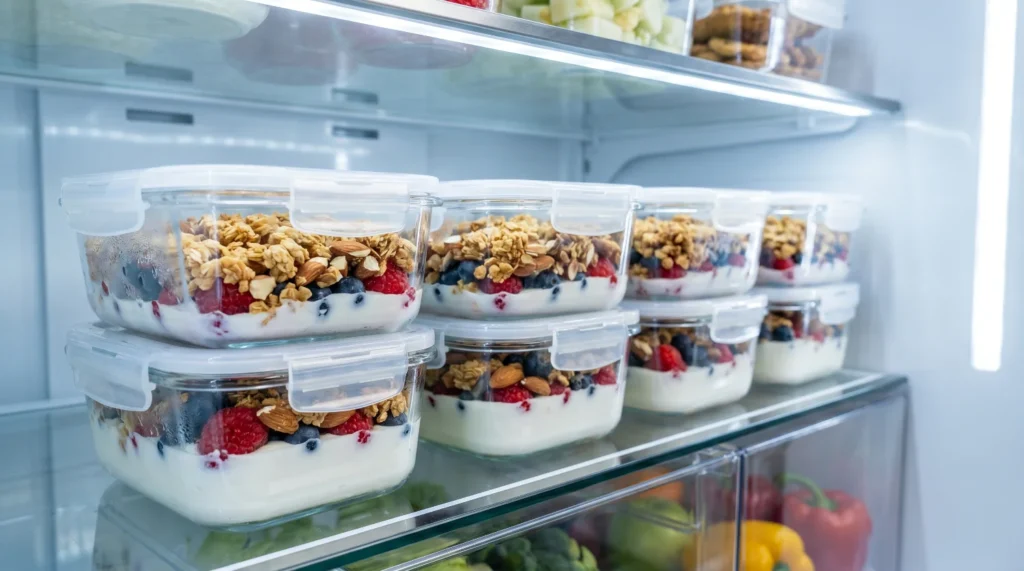
- Greek Yogurt Power Bowls: Prep containers with 1 cup of plain Greek yogurt. In separate small jars, prep “toppings” (almonds, hemp seeds, berries) to keep them from getting soggy.
- The “Emergency Prep” (Perfect Bars): Life happens. For the mornings when you oversleep, keep high-quality prepackaged options like Perfect Bars in the fridge. They use whole-food ingredients and organic honey, providing a reliable protein boost without the artificial “bodybuilding slop” taste.
Hack #6: Batch Cooking Beyond the Basics (Sheet Pans and Slow Cookers)
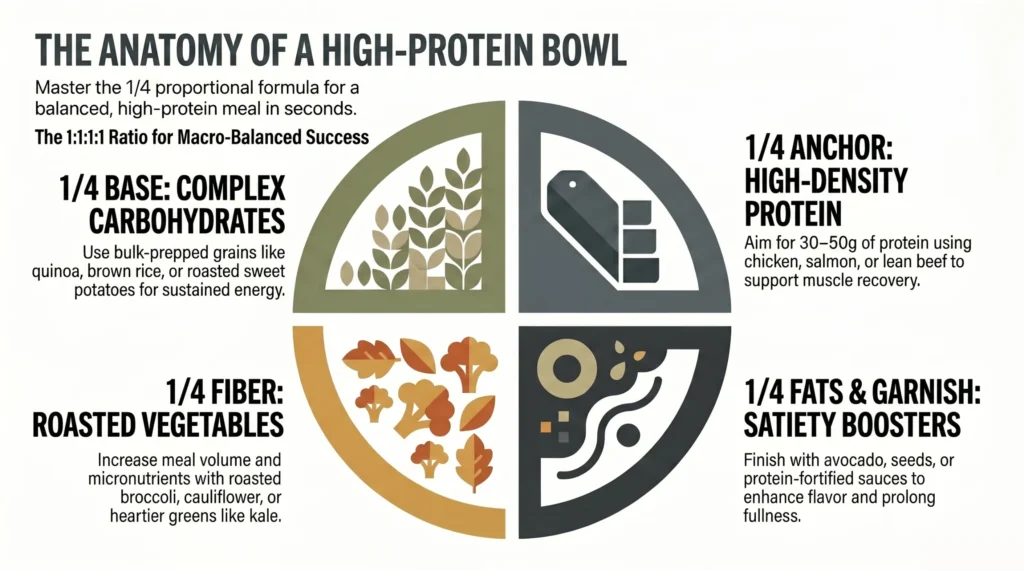
Efficiency in meal prep is about “Batch Cooking Brilliance.” The most successful preppers don’t cook meals; they cook components. By starting with the longest-cooking items—proteins and whole grains—you create a modular system.
The Anatomy of a High-Protein Bowl
To avoid the “sad watery mess” often associated with slow cookers, you must understand the structural mechanics of the machine.
- The Maillard Reaction: Never skip browning your meat in a skillet before adding it to the slow cooker. This chemical reaction between amino acids and reducing sugars creates the complex, savory flavors that a slow cooker cannot achieve on its own.
- Liquid Reduction: Slow cookers are closed systems; no moisture escapes. Use 30% less liquid than a standard recipe calls for.
- The Veggie Timeline: Watery vegetables (zucchini, peppers, spinach) should only be added in the final 30–60 minutes. Adding them at the start results in a structural breakdown that turns your meal into a flavorless mush.
Hack #7: The Grain Freezer Hack—Rice and Quinoa on Demand
Cooking grains like brown rice or quinoa every night is a significant time-sink. However, storing them in the fridge for more than a few days often leads to “gummy” textures due to the retrogradation of starch—a process where starch molecules realign into a rigid, crystalline structure as they cool, pushing out water.
The Baking Sheet Method for Perfect Grains:
- The Kitchn Cooling Secret: Run a baking sheet under cool water but do not dry it. Spread your freshly cooked grains in a thin, flat layer. The moisture on the sheet prevents the grains from sticking as the steam escapes.
- The Flash Freeze: Place the sheet in the freezer for 20 minutes. This “sets” the individual grains so they don’t clump into a block.
- Portioning: Move the grains into vacuum bags or freezer-safe bags in 1-cup or 2-cup portions. Flatten the bags to maximize surface area for even thawing.
- The “Straight to Heat” Rule: Never thaw grains in the fridge; this accelerates gumminess. Instead, move them directly from the freezer to the microwave or stovetop. Add 2 tablespoons of water per cup of grains. The steam will re-gelatinize the starch, returning the grain to its original, fluffy state.
Repurposing Strategy: The “Salmon Rice Bowl” & Beyond
The “death knell” of any meal prep routine is boredom. Eating the exact same chicken breast five days in a row is a recipe for failure. The professional’s secret is Repurposing Strategy—changing the “form” of your ingredients to trick your brain into sensory novelty. A sheet pan of Mediterranean chicken and peppers can be a “Bowl” on Monday, a “Wrap” with hummus on Tuesday, and a “Protein Salad” on Wednesday.
Deep Analysis: The Salmon Rice Bowl
This strategy utilizes “Volume Eating,” a technique where you add fiber-rich, low-calorie fillers to your high-protein base to increase satiety without overshooting your caloric budget.
- The Base: Use 1/2 cup of your frozen rice mixed with 1 cup of cauliflower rice. This doubles the volume while adding crucial micronutrients.
- The Protein: Take your flaked, reheated salmon (from Hack #1).
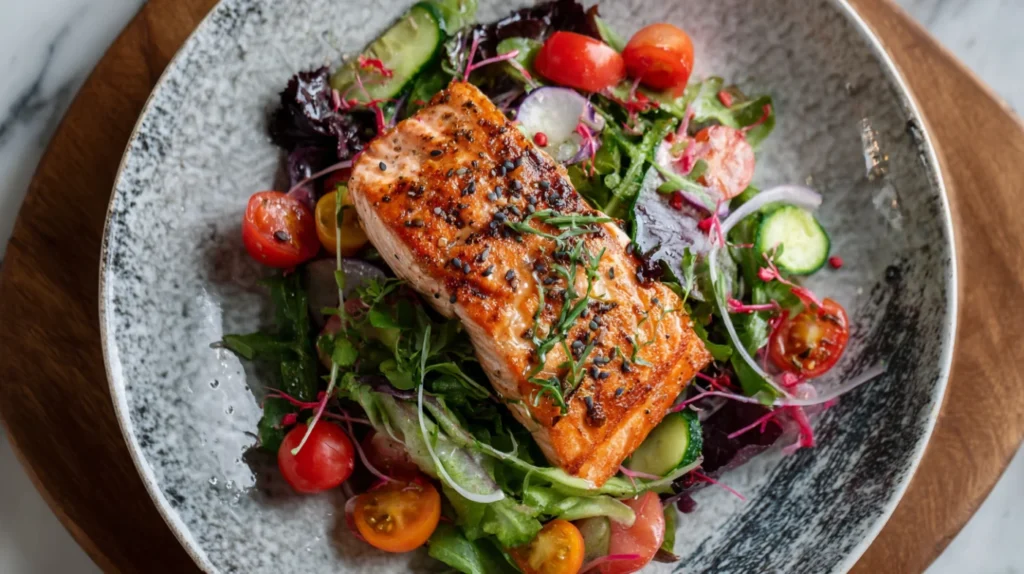
- The Sensory Shift: Add diced cucumber for crunch, sliced avocado for healthy fats, and a drizzle of sesame oil mixed with soy sauce.
By shifting the flavor profile from “roasted” to “Asian-inspired” through simple garnishes, you prevent palate fatigue and maintain long-term adherence to your easy high protein meal prep goals.
Conclusion: Consistency Over Perfection
The transition to a high-protein lifestyle does not require a culinary degree, but it does require a system. Success is built on the pillars of food science: low-and-slow reheating to protect muscle fibers, high-quality borosilicate storage to prevent chemical leaching, and strict adherence to the 30-minute cooling rule. Don’t feel pressured to prep 21 meals this Sunday. Start with just 2–3 “anchor” meals—perhaps your mid-week lunches or a batch of breakfast muffins. As these hacks become second nature, you will find yourself with more energy, less stress, and a kitchen that works for you, rather than against you. Reclaim your time, one meal at a time.
Frequently Asked Questions
Can you reheat salmon more than once? No. It is strongly advised to only reheat salmon once. Because salmon has delicate muscle fibers and high moisture content, each subsequent heating cycle causes further denaturation of proteins and moisture evaporation. This results in a dry, “fishy,” and unappealing texture. Only reheat the specific portion you intend to consume immediately.
How long does cooked chicken breast last in the fridge? Based on food safety standards from The Girl on Bloor and the NIH, cooked chicken breast is safe for 3 to 4 days when stored in an airtight, non-porous container (like glass) in a refrigerator kept below 40°F. Beyond this window, the risk of bacterial spoilage increases, and it is safer to move the portions to the freezer.
Can you freeze cooked rice without it getting mushy? Yes, provided you follow the “straight from freezer to heat” rule. The baking sheet method ensures individual grain integrity. By avoiding a slow thaw in the refrigerator—which causes starch retrogradation and gumminess—and instead using the microwave or stovetop with 2 tablespoons of water, you create a steam environment that restores the rice’s original texture.

Leave a Reply